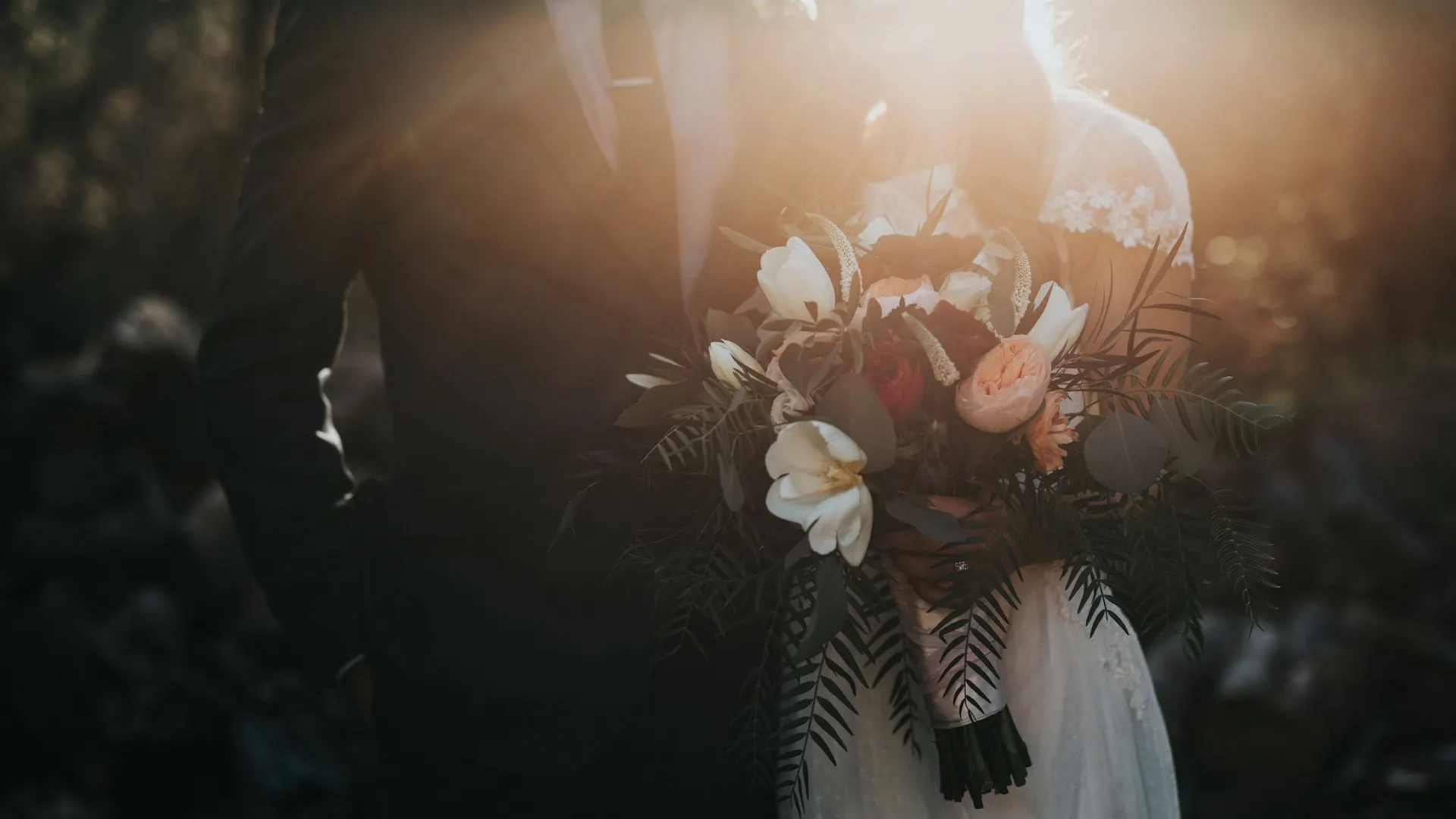
Clothes at a Yarra Valley wedding have to negotiate landscape. Even a polished reception room is usually reached by a path that is not a hotel carpet. The useful questions are about movement, weather and time — not about whether a silhouette is “in”.
This page does not list shops. Confirm any maker, hire service or store yourself.
The dress as a piece of logistics
When you speak with a maker, store or hire service, describe the day:
- Outdoor ceremony, indoor backup, or both
- Grass, gravel, timber, or a mix
- Month and likely temperature swing
- How far you walk between portraits
- Whether you will change before dinner
Ask about hem weight on grass, whether a long train needs a bustle that a friend can actually do, and how the fabric behaves in heat or in a heated winter room. If you are considering sleeves or a jacket, you are not being less bridal. You are reading the valley.
Shoes deserve their own recce. Bring them to a park. If they fail on damp grass, they will fail in Healesville.
Everyone else
A wedding party in matching shoes they cannot walk in becomes a photograph of discomfort. Give them the ground conditions early. Offer a heel height note, not a dictatorship, unless you are truly prepared to police it.
Guests need the same honesty. “Cocktail” on a vine row produces the wrong footwear. A sentence like “garden ceremony, gravel paths, evenings cool down” does more work than a mood word.
Jewellery and veils should be tested in wind. A veil that photographs like water in a studio can announce itself as a sail among vines. Ask the photographer and stylist before the morning of.
Timing
Garments need steaming time in rooms that may not have a hanging rail. Put a steamer, a hook and a person who knows the bustle on the run sheet. If the dress is travelling from Melbourne on the wedding morning, you have created a single point of failure; give it an earlier ride.
This guide will not rank boutiques or invent a “Yarra Valley bridal look”. Wear something you can stand in for hours on uneven ground, then let the vines do the rest.
Weather layers without losing the photograph
A wrap, a tailored jacket, a vintage coat, a shawl — choose one that you will actually put on when the temperature drops, not one that exists only for the getting-ready room. Tell the photographer so they can make the layer look intentional. Winter valley nights are not the moment to be brave and cold.
In summer, consider the walk from car to lawn and the fact that a dark car interior is an oven. A dress that cannot be sat in for a twenty-minute drive will arrive as a different dress.
Other people’s clothes
Parents often overdress for a garden and then cannot walk the path. Send them the same ground note you send friends. If there is a cultural dress with a long hem, recce the grass. If there is a uniform or tartan, check the heat.
Children’s clothes should survive grass stains as a possibility, not a tragedy. Give parents permission to bring a spare.
Jewellery, veils and the wind test
Stand outside with the veil before the morning of. If it needs two attendants to behave, it needs a plan or a shorter version. Earrings that catch on hair in a salon will catch on hair in a breeze. Necklace length should be tested with the neckline and with any microphone the celebrant uses.
Clothes are equipment for a rural day that happens to be emotional. Fit them to the day you are actually having, in the month you chose on the planning guide, and they will photograph as confidence rather than as a negotiation with the ground.
If you are choosing between two garments, take the one you can sit in, walk in, and stand in on grass. The valley will supply more atmosphere than a fragile hem. Save the fragile hem for a room that promised a floor.
A borrowed necklace or a new pair of earrings should pass the same wind and photograph test as a veil. If it catches, scratches or needs a person to manage it, it is not a detail. It is a task. Give it a task owner or leave it in the box.
The same test applies to a second outfit. If the change steals the meal or the last light, it is not a gift to the photographs. It is a theft from the day. Keep the change only if the run sheet still breathes. A single honest outfit is enough for a valley day. If rain is likely, pack a simple covering that can hang on a hook, not a garment that needs its own attendant.